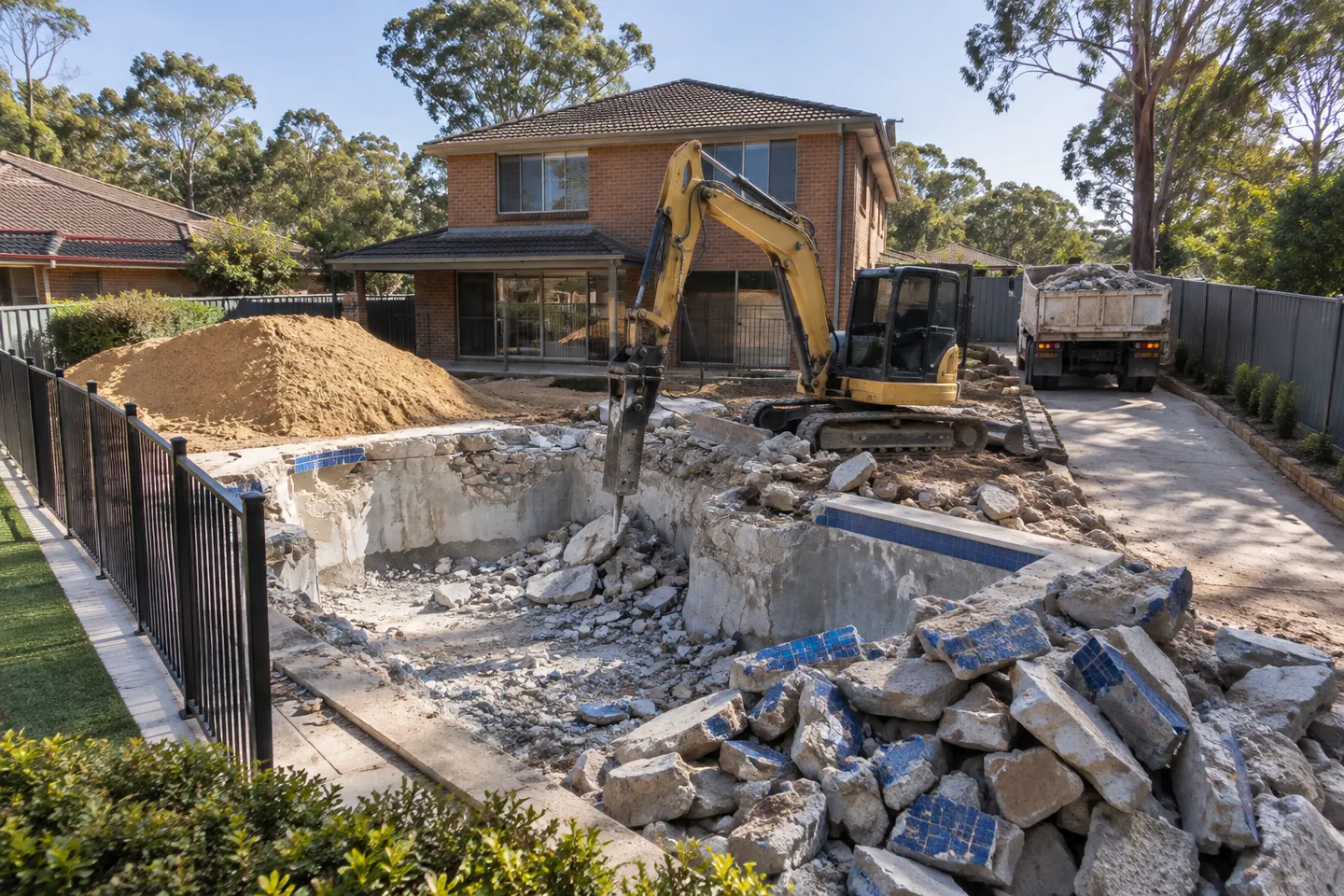
Concrete Pool Removal
Gunite and poured concrete pools broken out, carted and backfilled — the most common Sydney pool removal.
Learn more →The pool nobody swims in still costs power, chemicals and a fence inspection — and takes the best part of the backyard. Getting it out properly means choosing the right method first.
Licence and insurance details are provided on your discovery call, or whenever you ask. Request them →
Sydney has hundreds of thousands of backyard pools, and plenty of them were built in the 1970s, 80s and 90s for families whose children have long since moved out. Now they leak, they crack, they cost money every month, and they take up the flattest, sunniest part of the block.
Removing one is not complicated. Removing one properly — so the ground does not sink, the paperwork is right and the next use of the space is not compromised — takes a few decisions up front.
Full removal. The entire shell comes out and clean fill goes back in compacted layers. More expensive, but the ground can be engineered to take a granny flat, extension or new house, and there is nothing buried to explain when you sell.
Pool fill-in. Also called partial removal or break-and-fill. The floor is broken for drainage, the top of the walls is removed, and the shell is filled. Cheaper and quicker. Good for lawn and garden. Less good if you might ever build over it.
Coping, paving and decks. Glass or steel fencing. Pumps, filters, heaters and solar lines. Attached spas. Retaining walls holding up the pool area. Pricing all of it together is cheaper than coming back.
A lawn, a garden, a patio, a shed, a granny flat, an extension, or a whole new house. That answer decides the removal method, the fill material and how it is compacted.
Concrete pools — gunite, shotcrete or poured — are broken up with a hammer and carted. They are heavy, slow and the most common Sydney pool.
Fibreglass pools are generally cut into sections or lifted whole. Usually faster and cheaper.
Most Sydney pools sit behind the house. A wide driveway to the backyard means a proper machine and a truck. A 900mm side path means mini machines, conveyors, barrows and more days. Battle-axe blocks, steep yards and rock all add time.
Removing or filling in a pool in NSW commonly needs approval, and the pool barrier stays in place until the pool can no longer hold water. See council and approvals.
Area pages cover the Hills District, Northern Beaches, North Shore, Sutherland Shire, Western Sydney and South-West Sydney.
The cost page has the 2026 bands.
Call 02 6422 4202 or send your pool details through.
The cheaper option is not always the right one. You get both prices and what each means for building, selling and the lawn.
Clean fill in compacted layers, so the ground does not sink after the first wet winter.
Side paths, battle-axe blocks and steep yards are priced from the site, with mini machines and conveyors where needed.
Work is carried out by Civillink Logistics, a licensed NSW demolition contractor. Licence and insurance details are provided on request.
Gunite and poured concrete pools broken out, carted and backfilled — the most common Sydney pool removal.
Learn more →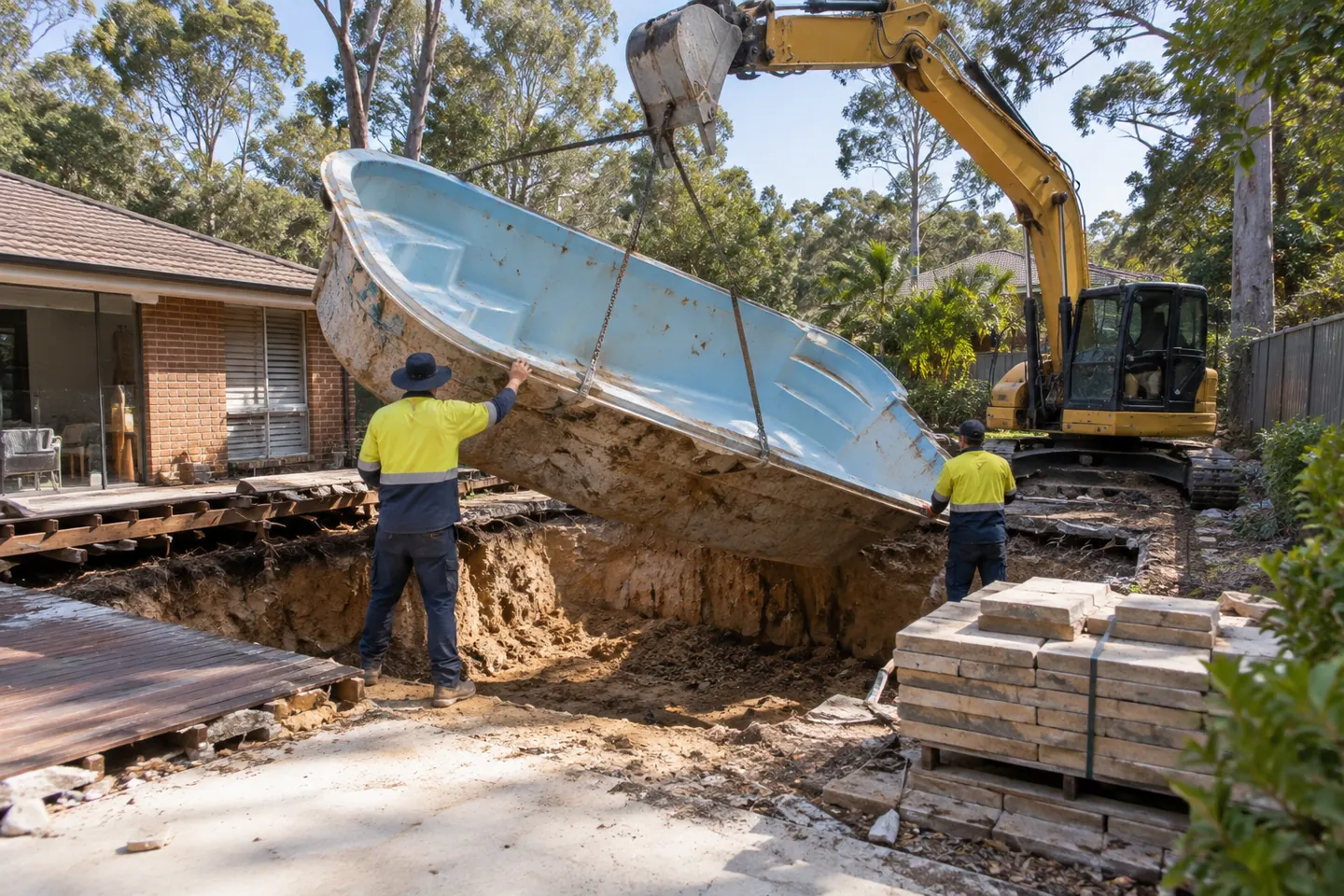
Fibreglass shells cut out or lifted whole, usually faster and cheaper than concrete.
Learn more →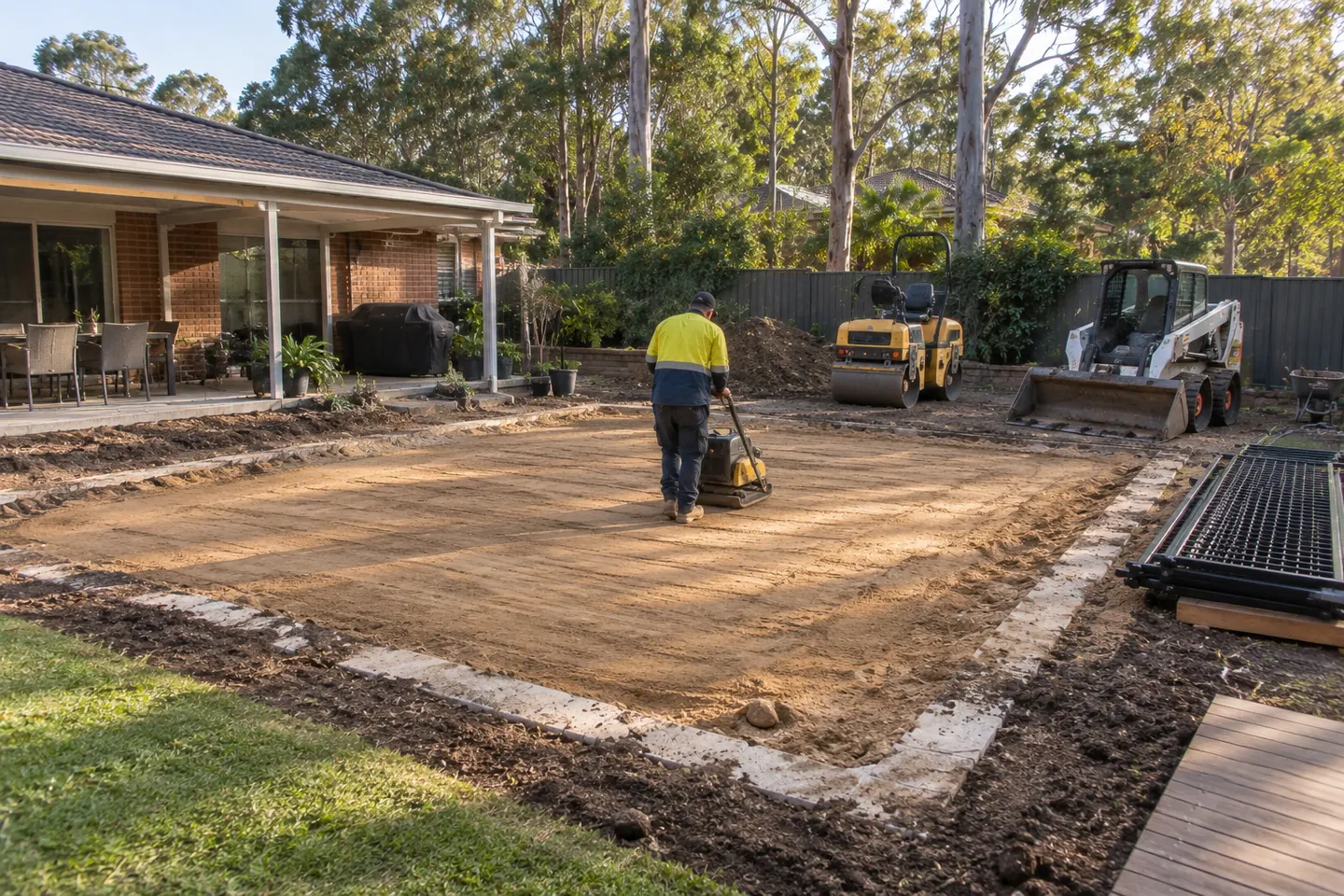
Every piece of the shell out and engineered backfill in — the option that keeps your future building options open.
Learn more →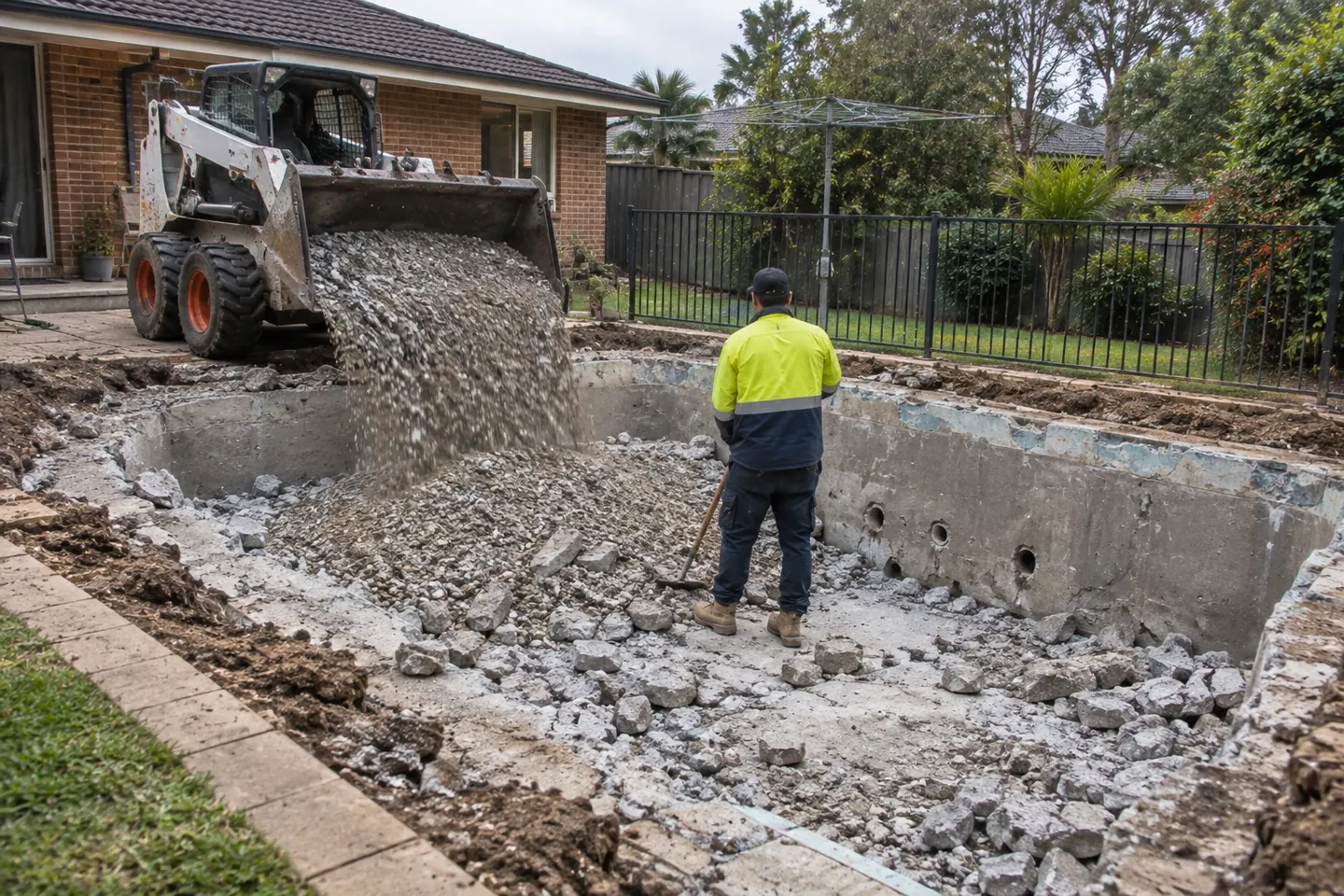
Break-and-fill: floor drained, top of the shell removed and filled. Cheaper, with trade-offs worth knowing first.
Learn more →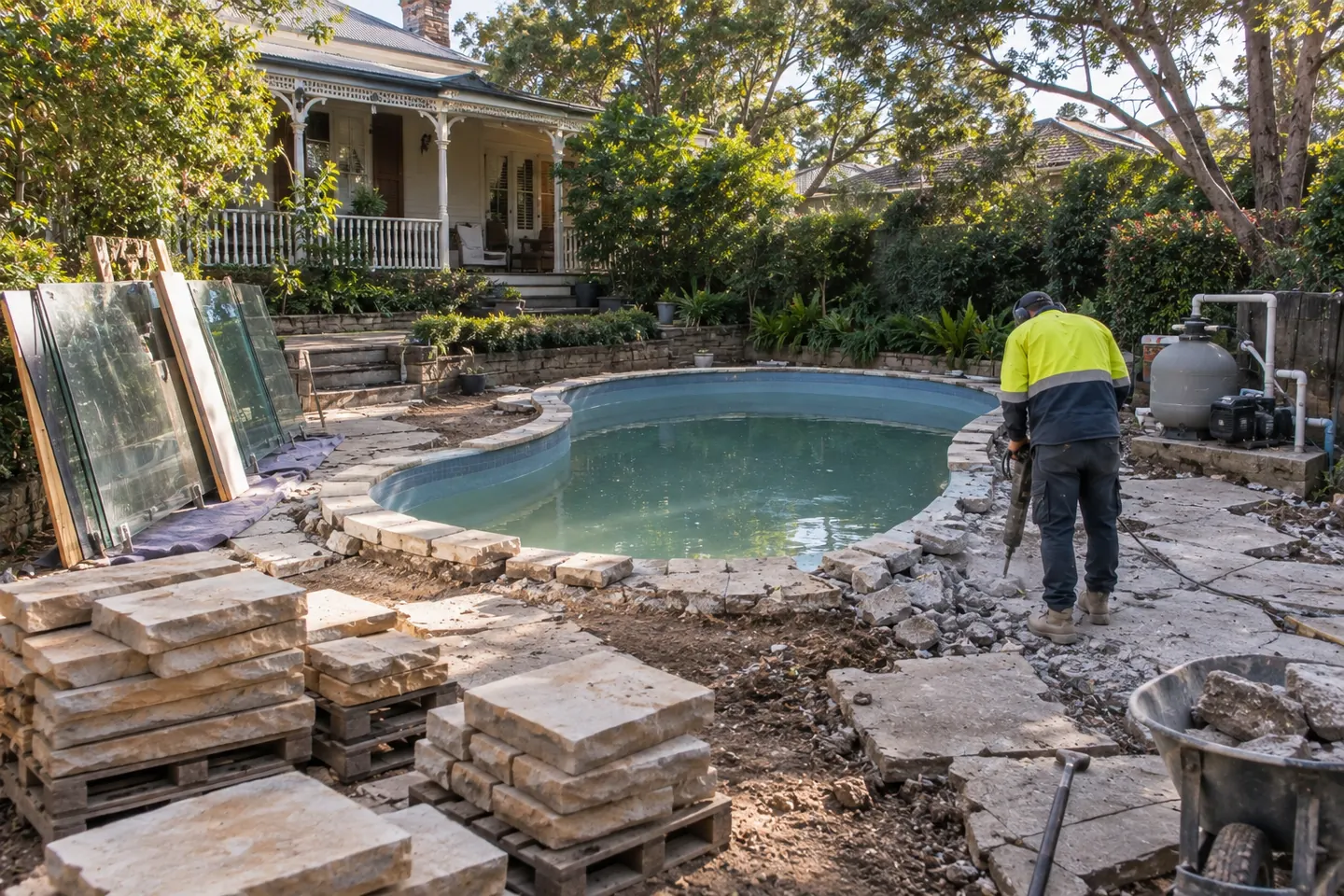
Coping, paving, pool decks, glass and steel fencing, pumps and equipment removed with the pool.
Learn more →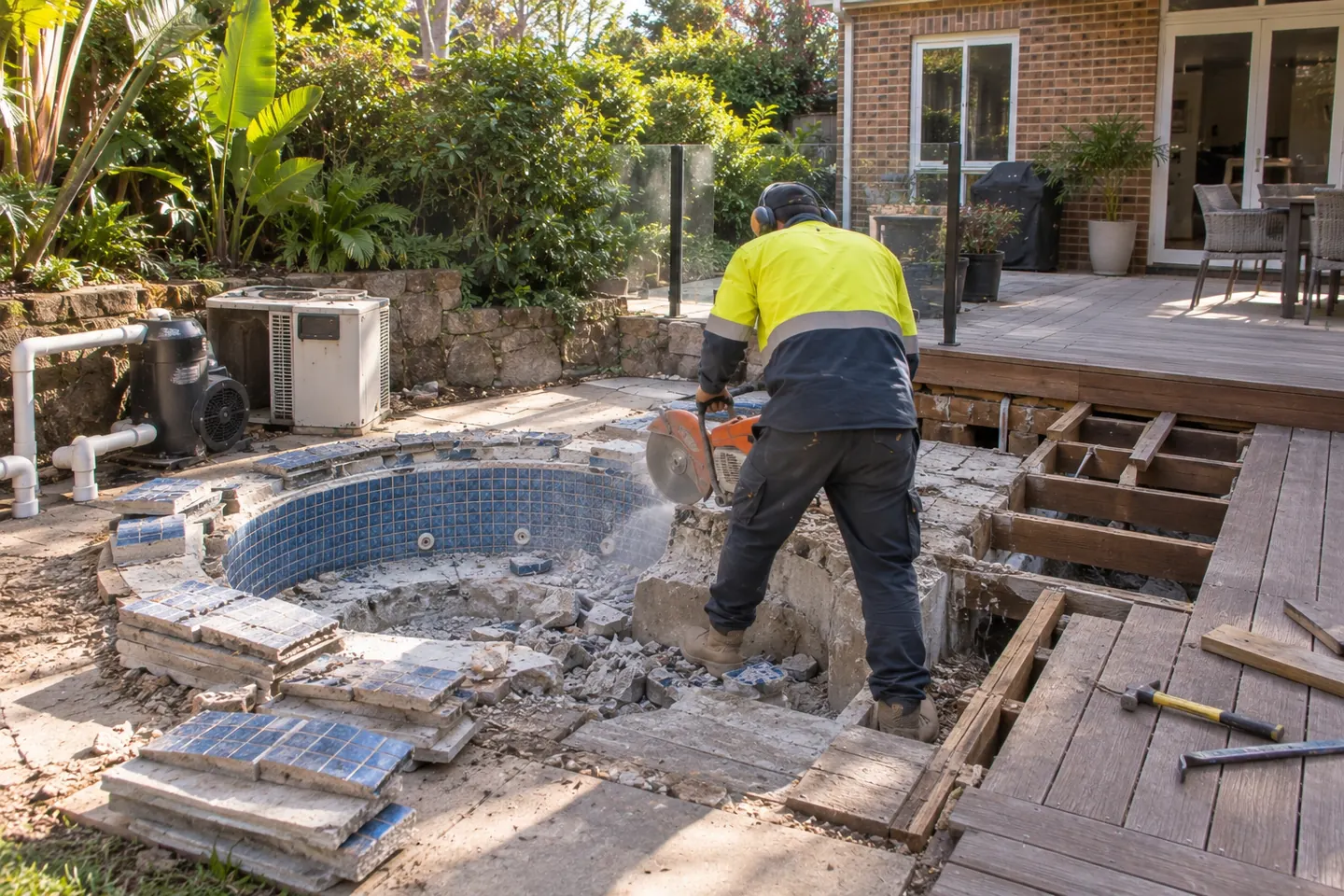
As a 2026 planning guide, fibreglass pool removal commonly runs $7,000 to $16,000, a concrete pool fill-in (partial removal) $9,000 to $20,000, and full concrete pool removal $14,000 to $35,000 or more. Access, pool size, surrounds and the amount of fill needed move the price most.
Full removal costs more but leaves ground that can be engineered for future building and avoids questions from buyers later. A fill-in costs less and suits a lawn or garden, but the buried shell may limit what can be built there. The right choice depends on what you want the space for.
Often, yes. Removing or filling in a pool commonly needs a complying development certificate or development application, though requirements vary by property and council. Confirm with a certifier or your council before work starts. Pool barrier rules continue to apply until the pool can no longer hold water.
Most Sydney pool removals take two to five working days on site. Tight access, large concrete pools, rock or wet weather can extend that.