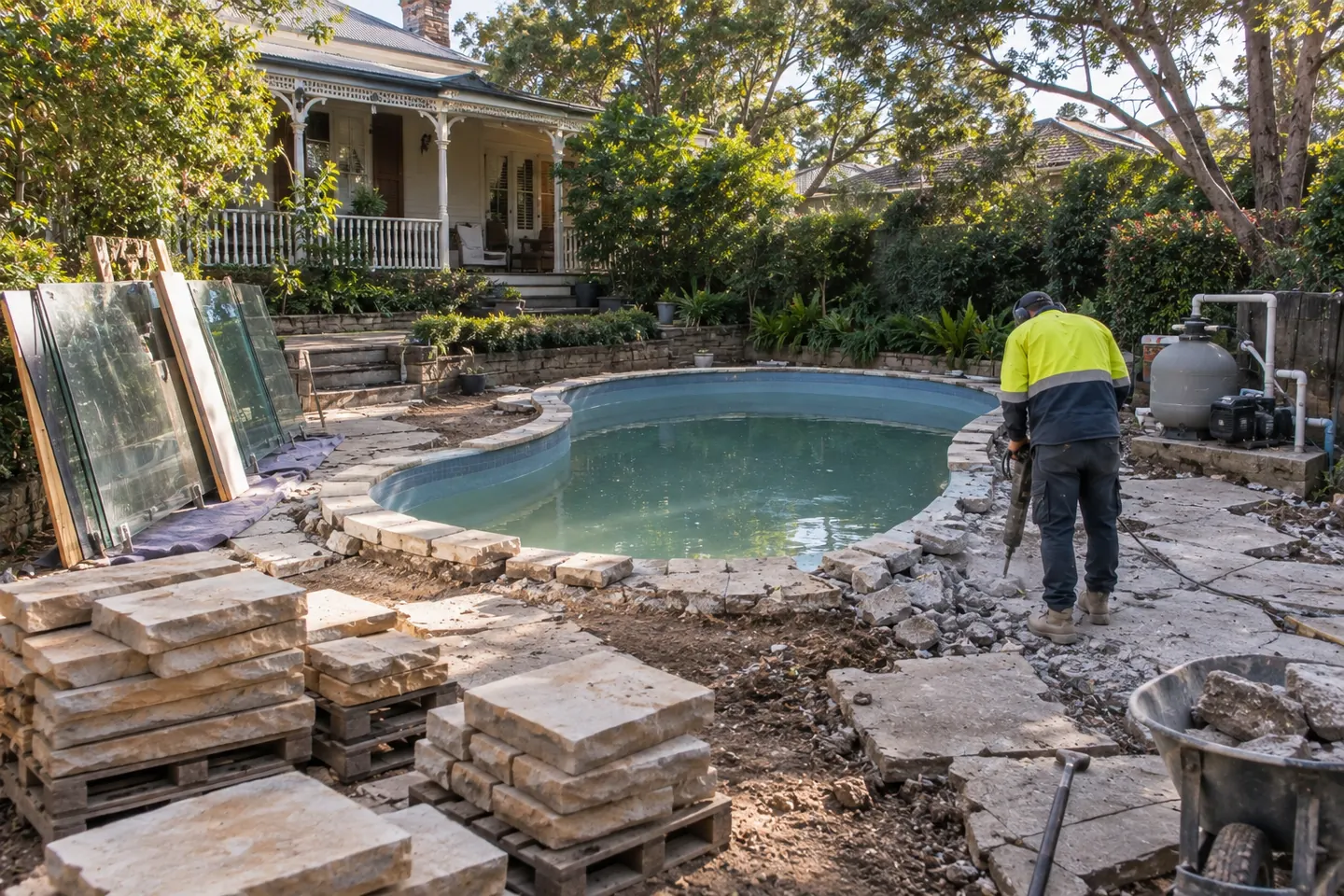
What is usually around a Sydney pool
- Coping — sandstone, concrete, tiled or brick.
- Paving — concrete, travertine, sandstone, pavers on sand or mortar.
- Decks — timber or composite, with subframes and footings.
- Pool fencing — glass, aluminium, steel or timber, with posts and footings.
- Equipment — pumps, filters, chlorinators, heaters, pipework and pads.
- Solar heating lines on the roof.
- Retaining walls holding up the pool area.
- Pergolas and shade structures.
Why price it together
Machines, trucks and crew are already on site. Removing surrounds at the same time as the pool avoids a second mobilisation and lets the whole area be levelled and finished in one go.
Coping and paving
Lifted before the shell is broken. Stone coping and pavers in good condition are set aside if salvage is agreed. Concrete paving is broken and carted with the pool concrete.
Fencing
Pool barrier obligations continue until the pool can no longer hold water. The fence is removed at the right stage, not first. Glass panels are removed carefully and stacked if they are being kept or sold.
Equipment and services
Electrical supply isolated by a licensed electrician. Plumbing capped. Gas heaters disconnected by a licensed gas fitter. Roof solar lines removed and roof penetrations sealed.
Retaining walls
Pools on sloping blocks are often held by retaining walls. Removing the pool, and especially changing ground levels, can affect those walls. They are assessed before work and engineering advice sought where needed.
Older equipment housings
On pre-1990 properties, old filter sheds, equipment enclosures and fences can include asbestos cement. Anything suspect is tested, and removal is by a separately licensed asbestos removalist.
Related
Concrete pool removal, fibreglass pool removal and spa removal.
Call 02 6422 4202 or send your pool details through.
Two ways to get rid of a pool
Full removal
Shell out, compacted backfill. Costs more. Keeps building options open and leaves nothing buried.
Fill-in
Floor broken, walls cut down, shell filled. Costs less. Best for lawn and garden only.
Questions people ask before they commit
When can the pool fence come down?
The pool barrier must remain until the pool can no longer hold water. Once the pool has been removed or filled so it is no longer a pool, the fence can usually be removed. Confirm the requirements for your property rather than removing the fence early.
Can pavers and glass fencing be salvaged?
Sometimes. Good-condition sandstone coping, natural stone pavers and frameless glass panels can have reuse or resale value. Salvage takes more care and time, so it is agreed and priced beforehand.
Who disconnects the pool equipment?
Pumps, filters, chlorinators and heaters are isolated and disconnected by licensed trades — an electrician for electrical supply and a plumber or gas fitter where plumbing or gas heaters are involved — before removal.
Do you remove pool decks?
Yes — timber and composite decks, their subframes and footings. Old treated timber and hardwood are sorted for disposal.